
Ashland Park
Updated September 2026
Ashland Park at a Glance
- Trash and recycling days
- Tuesday and Friday, depending on your block. Look up your address on the trash pickup map.
- Council district
- District 5, represented by Liz Sheehan. Find your exact district by address.
- Zip code
- 40502
About Ashland Park
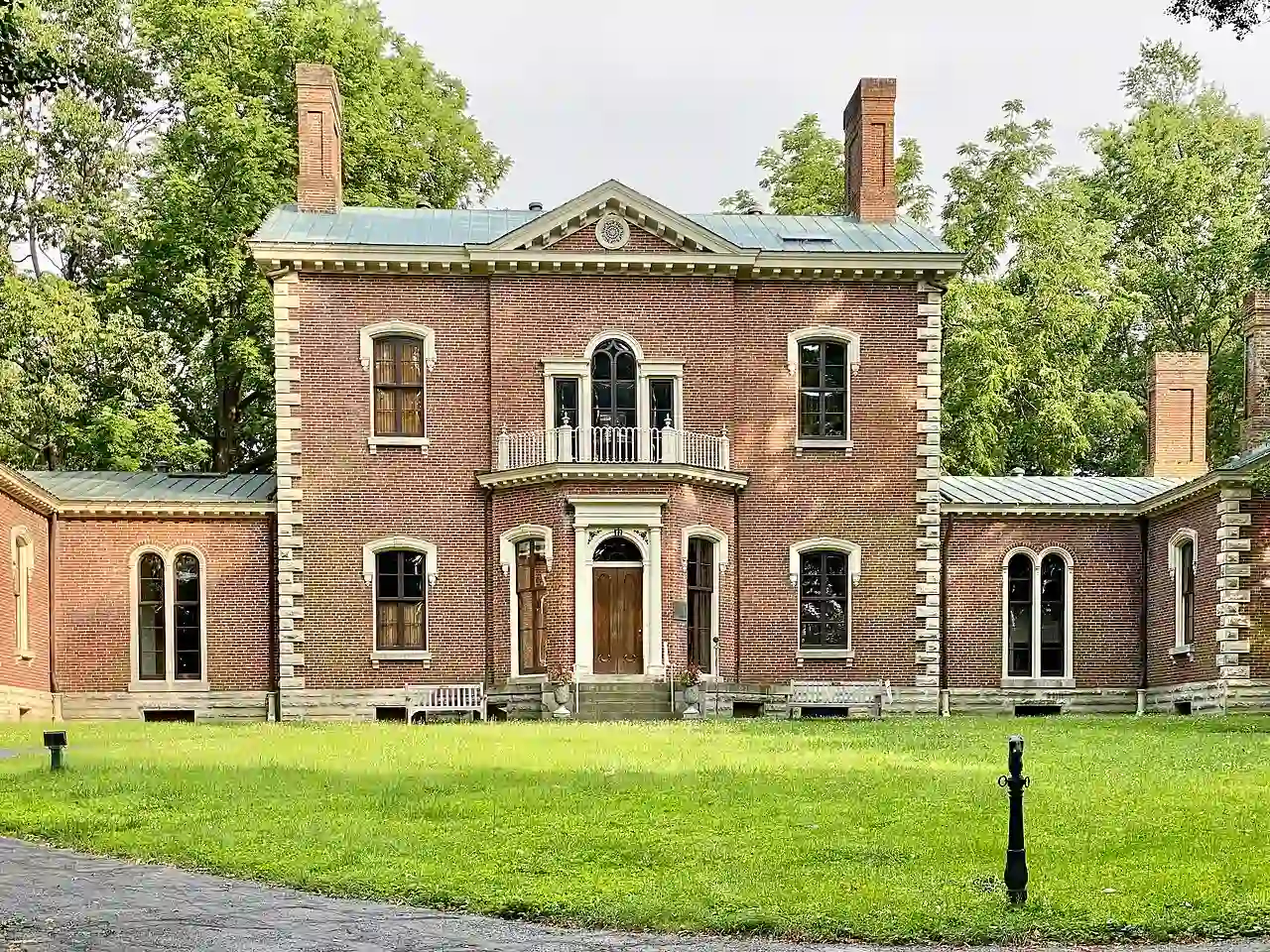
Ashland Park is one of Lexington's most architecturally distinctive historic neighborhoods, sitting just a couple miles east of downtown. The neighborhood was designed in 1904 by the Olmsted Brothers, the same Boston landscape architecture firm that designed the grounds of the U.S. Capitol, the White House, the Chicago World's Fair, and the Louisville park system. The firm was hired by descendants of Henry Clay to develop the neighborhood on Clay's original 600-acre Ashland estate. Construction took 15 years and was completed around 1930. The neighborhood is roughly bounded by Ashland Avenue, Richmond Road, Chinoe Road, and Fontaine Road, covering 188.9 acres. Henry Clay's actual Ashland estate, which includes his rebuilt 1854-1856 main house, still sits in the eastern portion of the neighborhood. The estate's grounds, designated as the Ashland Arboretum in 2018, contain more than 400 trees of 44 different species. Henry Clay himself is said to have introduced gingko trees to Lexington. Catalpa Road is famous each fall for its gingko trees, whose leaves drop almost simultaneously to create a striking yellow blanket along the streetscape. The neighborhood was added to the National Register of Historic Places in 1986. Architectural styles include Colonial Revival, Bungalow/Craftsman, and American Foursquare. It's worth noting that Henry Clay's main house at Ashland was rebuilt by Lexington architect Thomas Lewinski, the same architect who designed the Bell House in Bell Court. The east side of Lexington has more Lewinski architecture than most people realize.
What's Nearby
Ashland Park sits between two parks: Woodland Park to the west and Clay's Spring Park (named for Henry Clay) to the southeast. Woodland Park is one of Lexington's oldest, with tennis courts, basketball courts, a ballfield, an aquatic center, and a skate park. It hosts the annual Woodland Art Fair, a free juried art event featuring well over 150 artists. Clay's Spring Park is home to the historic spring that was part of the Clay estate, now marked by a stone monument. The neighborhood is walkable to the Chevy Chase commercial corridor on Euclid Avenue (Charlie Brown's, Chevy Chase Inn, A.P. Suggins, Bourbon n' Toulouse), which sits just to the south. To the west, downtown is about a 2-mile walk or short drive.
A walk through Ashland Park
About 1.75 miles, about 35 minutes at a walking pace. Start at the gates of Ashland, the Henry Clay Estate, at 120 Sycamore Road. The distance below is the street loop; the estate grounds add whatever you walk while you are on them.
- Ashland, the Henry Clay Estate. Clay's rebuilt 1854 to 1856 main house sits in the eastern part of the neighborhood, on ground that was part of his original 600-acre farm. The Olmsted Brothers laid the streets out around it in 1904.
- The Ashland Arboretum. The estate grounds were designated an arboretum in 2018 and hold more than 400 trees across 44 species. Henry Clay is said to have introduced gingko trees to Lexington.
- Catalpa Road. Leave the estate on Sycamore Road and pick up Catalpa Road. This is the street people photograph in the fall, when its gingkos drop their leaves almost all at once.
- Clay's Spring Park. Follow Catalpa southeast and take Clay's Spring Lane down to the park. It holds the spring that served the Clay estate, now marked with a stone monument.
Come back up Clay's Spring Lane and turn onto Sycamore Road to finish at the estate gates.
Annual Events
Ashland Park has the Henry Clay Estate inside it and Woodland Park two blocks off its western edge, so its calendar runs from spring beer gardens to a candlelit December.
West Sixth Beer Garden pop-ups at Woodland Park
Four Thursdays a year, 4 to 8 pm (2026 ran Apr 23, May 14, Jun 11, Sep 17)
Woodland Park, 601 E. High St
Food trucks, live music, and West Sixth on tap; a short walk from the neighborhood's west side. Free.
Event detailsAnnual Lawn Party at Ashland
Late June, a Saturday evening (2026 ran Jun 27, 5:30 to 10 pm)
Ashland, The Henry Clay Estate, 120 Sycamore Rd
The estate's flagship fundraiser on the lawn: local chefs, cocktails, auctions, music. Ticketed ($250 in 2026).
Event detailsShakespeare in the Park
Two weekends in mid-July (2026 ran Jul 10 to 12 and 16 to 19)
Woodland Park, 601 E. High St
Free outdoor Shakespeare with pre-show music, food trucks, and vendors.
Event detailsBallet Under the Stars
Late July into early August (2026 ran Jul 29 to Aug 2)
Woodland Park, 601 E. High St
Ballet on an outdoor stage by the gazebo. $9.
Event detailsWoodland Art Fair
Third weekend of August (2026 ran Aug 15 to 16)
Woodland Park, 601 E. High St
The 50-year-old art fair, a five-minute walk from most of the neighborhood. Free.
Read our Woodland Art Fair write-upChevy Chase Street Fair
A Saturday in late August, 4 to 10 pm (2026 ran Aug 22)
Euclid Ave between Ashland Ave and High St, at the neighborhood's southwest corner
A block party with vendors, live music, street food, and craft beer. Free to walk in.
See the Chevy Chase guideLiving History at Ashland
Last Saturday of September, 10 to 5 (2026 ran Sep 26)
Ashland, The Henry Clay Estate, 120 Sycamore Rd
A day of reenactors, Saddlebreds, wet-plate photography, and exhibits on the estate's African American, Indigenous, and women's history. Free.
Event detailsParktoberfest at Ashland
First Saturday of October, 2 to 8 pm (2026 ran Oct 3)
The Great Lawn at Ashland, The Henry Clay Estate, 120 Sycamore Rd
Thirteen Lexington breweries, cideries, and a meadery pouring into $10 steins, food trucks, a Kids Grove, and bands against the brick of the mansion. Free to walk in, put on with West Sixth.
Read our Parktoberfest write-upIllumination at Ashland
First Saturday of December, 4 to 6 pm, tree lit at dusk (2025 ran Dec 6)
Ashland, The Henry Clay Estate, 120 Sycamore Rd
Tree lighting with Santa, vendors, and live music, then candlelight tours of the decorated mansion. Grounds free; tours ticketed.
Event details
Christ the King Oktoberfest (third weekend of September) is about a mile south on Colony Blvd; see our write-up.
Dates are the most recent published as of September 2026; check the organizer before you go.
Highlights
- 1904 Olmsted Brothers designed neighborhood
- Listed on National Register of Historic Places since 1986
- Adjacent to Henry Clay's Ashland estate
- Ashland Arboretum (400+ trees, 44 species)
- Catalpa Road gingko trees in fall
Amenities
Cost of Living
Ashland Park has a definite "old money" feel. Home prices reflect the architecture, the history, and the rarity of Olmsted-designed neighborhoods. As of 2026, cottages and bungalows typically start around $600,000 and run up. Larger estate-style homes range from $2 million to $3 million or more. For context, Ashland Park sits substantially above Chevy Chase and Bell Court at the higher end, and far above the city's median.
Schools
Most Ashland Park addresses are zoned for Ashland Elementary School (named for the neighborhood and Clay's estate), Morton Middle School, and Henry Clay High School. It's worth noting that Henry Clay High School itself is named after the same Henry Clay whose estate gave the neighborhood its name. You can check any address with our Lexington school zone lookup, which also shows whether the elementary assignment changes in fall 2027. School attendance zones are set by address and can change with rezoning, so look up your exact schools with the FCPS SchoolSite Locator.
Ashland Park FAQ
Who designed Ashland Park?
The Olmsted Brothers, the Boston landscape architecture firm, in 1904. Descendants of Henry Clay hired the firm to lay out the neighborhood on Clay's original 600-acre Ashland estate. Construction ran about 15 years and finished around 1930.
What zip code is Ashland Park in Lexington, KY?
40502.
Is Ashland Park a historic district?
Yes. It was added to the National Register of Historic Places in 1986. The dominant architectural styles are Colonial Revival, Bungalow and Craftsman, and American Foursquare.
Where is Henry Clay's Ashland estate?
At 120 Sycamore Road, in the eastern part of the neighborhood. The grounds were designated the Ashland Arboretum in 2018 and hold more than 400 trees of 44 different species.
Why is Catalpa Road known for its trees?
Its gingko trees drop their leaves almost simultaneously each fall, which lays a yellow blanket down the length of the street for a few days. Henry Clay is said to have introduced gingkos to Lexington.
Which schools serve Ashland Park?
Most addresses are zoned for Ashland Elementary School, Morton Middle School and Henry Clay High School. Zones are set by address and can change with rezoning, so check an exact address with the FCPS SchoolSite Locator.